
Get Consultation
+86-15627367687
ER collet chucks are commonly used in machining applications to hold drills, end mills, and other cutting tools. The accuracy of an ER collet chuck is measured by its runout, or the amount of wobble in the tool when it is spun. Choosing the right level of accuracy for an ER collet chuck depends on a number of factors.
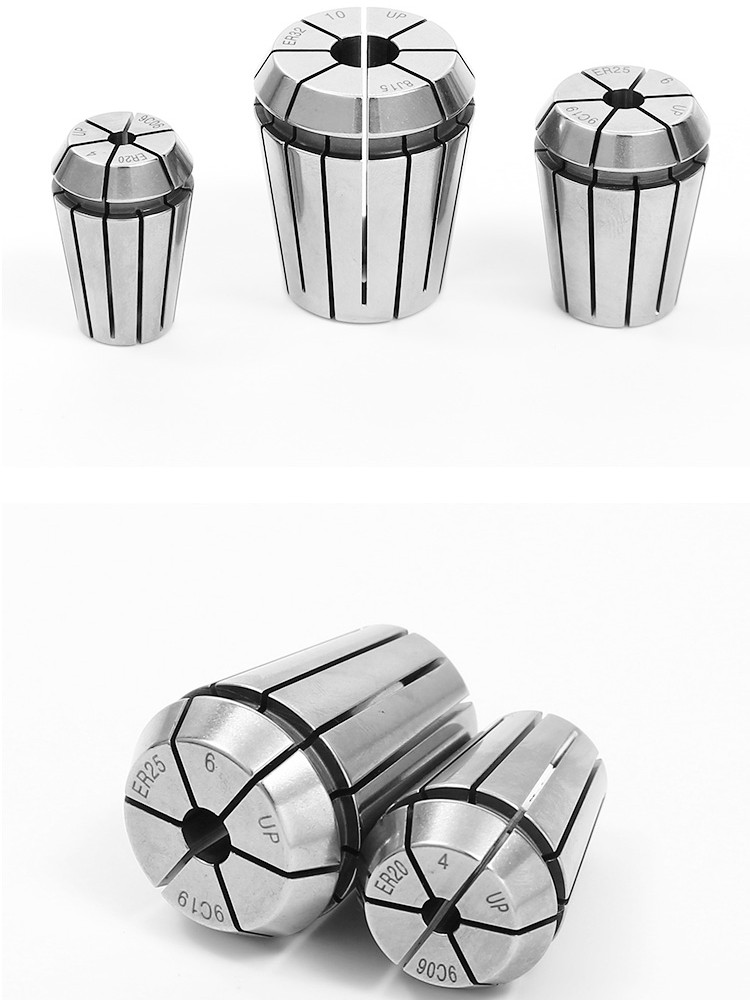
One factor is the type of machining being performed. For basic milling and drilling operations, a less precise ER collet chuck may be sufficient. However, for precision machining operations such as those found in the aerospace or medical industries, a high-precision ER collet chuck is essential. In these applications, even small amounts of runout can significantly impact the accuracy and quality of the finished product.
Another factor is the size of the tool being held. Generally speaking, smaller tools require higher precision ER collet chucks. This is because small tools have less mass and are more sensitive to any degree of runout. Conversely, larger tools can often tolerate slightly higher levels of runout without affecting the machining process.
Additionally, the material being machined plays a role in determining the required accuracy of the ER collet chuck. Harder and more brittle materials such as titanium and ceramics require more precise tooling to avoid fracturing or chipping. Softer materials like aluminum or plastics may not require as much precision.
Finally, the machining environment should be taken into consideration. If the machine is prone to vibration or other sources of instability, a higher precision ER collet chuck may be necessary to compensate for these factors.
In summary, choosing the right level of accuracy for an ER collet chuck requires careful consideration of the specific machining application, tool size, material, and environment. By taking these factors into account, machinists can select the most appropriate tooling for their needs and achieve optimal results in their machining operations.